7 of the Biggest Financial Regrets of Retirees

What would you do differently if you could go back ten years before retirement? You might set aside more from each paycheck. Or you might look at the car you financed and ask yourself whether you still want to be making payments after you stop working.
In a report published in July 2026, the TIAA Institute and Ipsos asked retirees what they wished they’d done differently. Saving sooner and saving more topped the list. Their research also highlighted regrets about health costs, life disruptions, and other financial pressures that can be easy to overlook while you’re still earning a paycheck.
1. Waiting too long to start saving
Seventy-six percent of surveyed retirees regretted waiting to start saving. It’s easy to see how that happens. There’s always a more immediate use for the money, especially when you’re raising a family. If you’ve been waiting for the perfect month to start, look at what you could set aside from your next paycheck. A modest amount can give you a habit to build on.
2. Saving too little
Seventy-one percent wished they’d saved more. You can contribute for years and still find that the amount you chose when you opened the account no longer fits your needs. Look at what you’re putting away today. If you get a raise or pay off a loan, decide how much of that newly available money you can save before it gets absorbed into your spending.
3. Underestimating how life can disrupt their plans
A layoff, a health issue, or a family member’s need for care can move up your last day at work. If your plan depends on three more years of paychecks, ask what you’d do if you had only one. Even a rough answer can show you which expenses you’d have room to cut and where you’d need a backup plan.
4. Underestimating healthcare and long-term care costs
Think about what you pay for prescriptions, dental care, and other out-of-pocket expenses now. Then consider what coverage you’ll have when you leave work. Long-term care deserves a conversation of its own. If you or your spouse needed help with everyday activities, who could realistically provide it, and what might you have to pay for?
5. Leaving retirement plans too vague
“We’ll spend more time with family” sounds like a plan until you realize the grandkids live two states away. How often do you want to visit? What would those trips cost? Sketch an ordinary month in retirement, including what you hope to give, and add expenses that come up only a few times a year. Now you have something you can budget for.
6. Carrying too much debt into retirement
A $350 car payment can feel different once your paycheck stops. Make a list of the payments you expect to carry into retirement and when each one will end. Seeing those dates together can help you decide which debts to tackle first.
7. Overlooking the effect of rising prices
Today’s grocery bill is a starting point. Ask how much room your budget would have if groceries, insurance, and utilities all cost more in a few years. That question matters especially when much of your income is fixed.
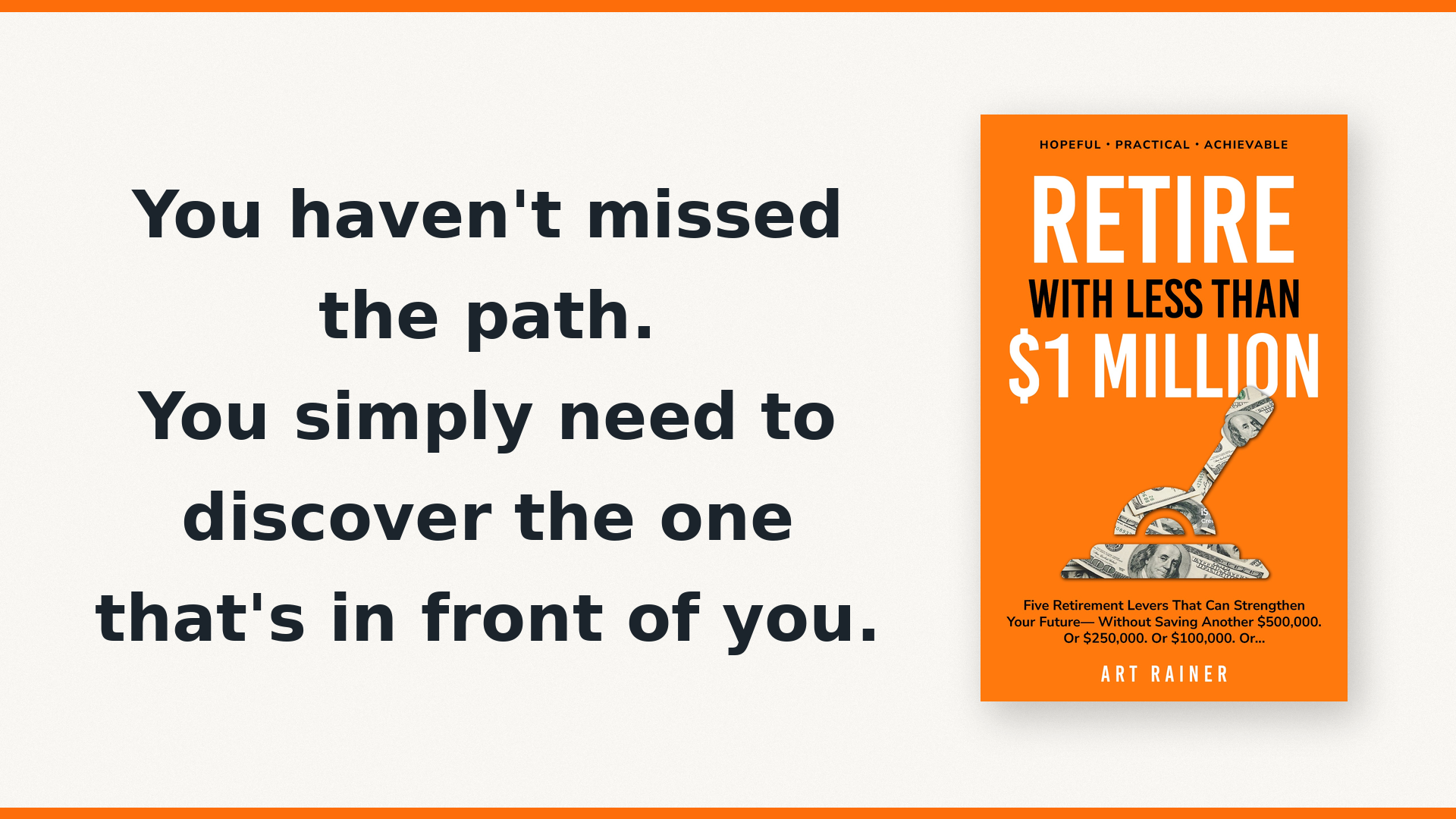
Retire With Less Than $1 Million is a book for people who recognize themselves in some of these regrets. You can’t go back and start saving with your first paycheck. You can look at what it will cost to live each month, what income you can count on, and which decisions could bring the two closer together. That’s a place to begin with the time and resources God has given you today.