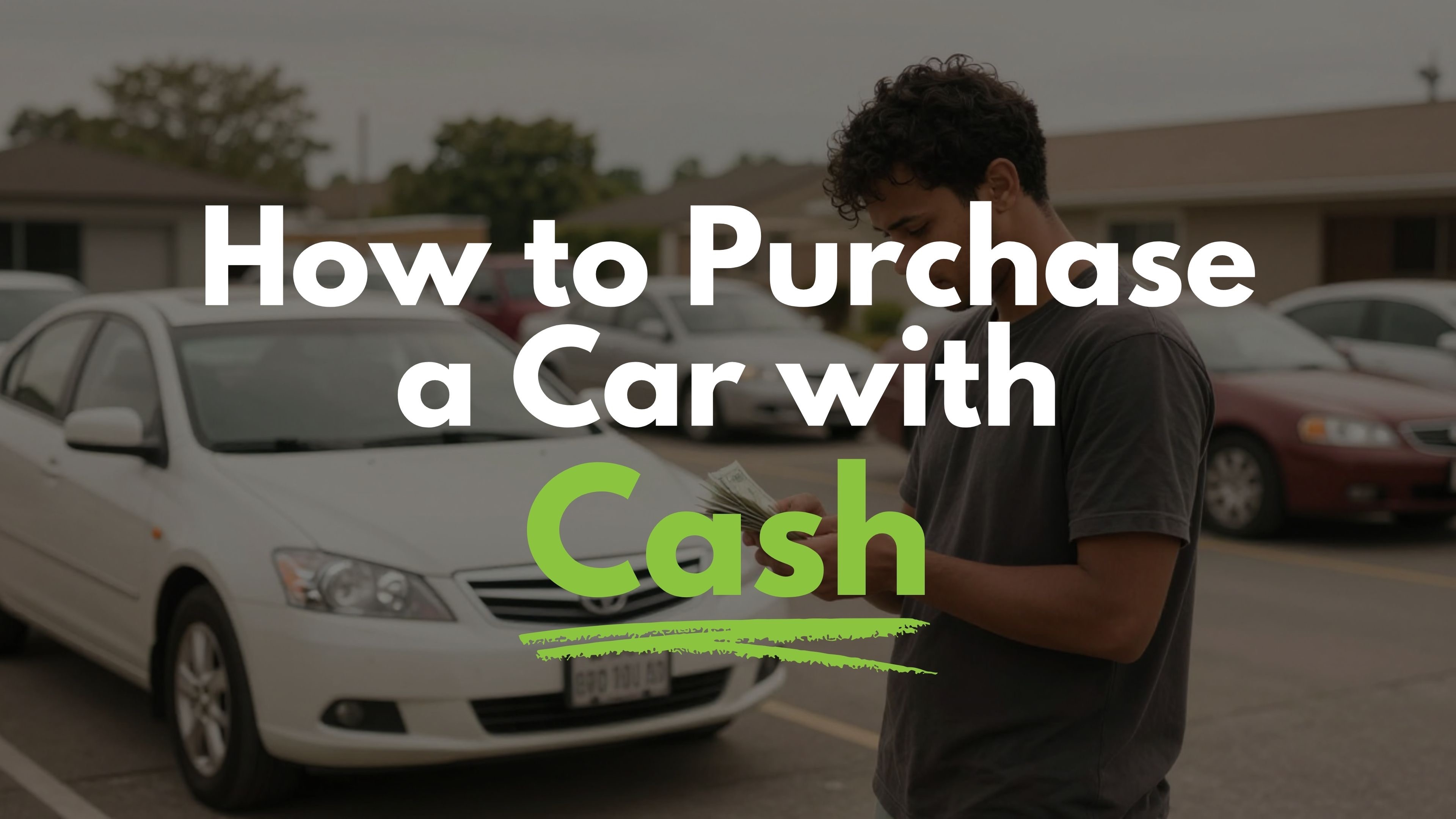
How to Purchase a Car with Cash
For many people, buying a car means signing up for years of monthly payments. In fact, car debt has become so normal that most people never even consider another option. But there is a better way: purchasing vehicles with cash.
Now, buying a car with cash does not necessarily mean walking into a dealership tomorrow and dropping $40,000 on a brand-new SUV. Instead, it often involves a gradual process, a strategy that helps you avoid debt while building long-term financial freedom.
Change the Question
The first step is changing your mindset. Most people ask:
“How much car payment can I afford each month?”
A better question is:
“How much can I intentionally save for a vehicle?”
That shift changes everything.
Instead of focusing on what fits into a monthly payment, begin focusing on building a plan that allows you to own your vehicles outright.
Start With a “Bridge Car”
Rather than financing an expensive vehicle immediately, start by purchasing an inexpensive but dependable used vehicle with cash. Think of this as your “bridge car.” Its purpose is not to impress anyone. Its purpose is to provide reliable transportation while giving you time to save aggressively for your next vehicle.
Typically, a bridge car might cost somewhere between $3,000 and $7,000. The goal is reliability, not luxury. Vehicles like older Toyota Corollas, Honda Civics, Toyota Camrys, or Honda Accords often make excellent options because they are known for durability and lower repair costs.
Before purchasing, have a mechanic inspect the vehicle. A small inspection fee can save you thousands later. Also, look for vehicles with clean titles, maintenance records, and owners who appear to have taken care of the car.
Create a Car Sinking Fund
Once you purchase the vehicle, the real strategy begins.
Instead of sending hundreds of dollars every month to a lender, begin placing that money into a dedicated car sinking fund. This is simply a savings account specifically reserved for future vehicle purchases and repairs.
For example, let’s say someone was planning to finance a car with a $500 monthly payment. Instead, they purchase a $5,000 vehicle with cash and begin saving that same $500 each month.
After one year, they have saved $6,000.
After two years, they have saved $12,000.
Now add in the resale value of the original vehicle. If the bridge car can still be sold for $3,000 after two years, the buyer now has $15,000 available for the next vehicle purchase—all without taking on debt.
Upgrade Slowly and Strategically
This is where momentum starts building.
The individual upgrades from a $5,000 car to a $15,000 car purchased entirely with cash. The newer vehicle may be significantly more reliable, more comfortable, and better suited for long-term use. Yet there is still no car payment.
But the strategy does not stop there.
The key to long-term success is continuing to save into the sinking fund even after upgrading. Many people make the mistake of stopping once they purchase the better car. Instead, continue setting aside money each month.
Three years later, that same person may have another $18,000 saved. If their current vehicle is worth $10,000 at trade-in or resale, they now have nearly $30,000 available for their next vehicle purchase—again, with cash.
Break the Cycle of Car Payments
This approach works because it breaks the cycle of perpetual car payments. Too many people trade in vehicles before they are paid off, roll negative equity into new loans, and stay trapped in payments for decades.
Purchasing vehicles with cash creates something far more valuable than simply owning a car outright: financial margin.
Without a car payment:
- Cash flow improves
- Financial stress decreases
- Savings can grow faster
- Investing becomes easier
- Emergencies become less overwhelming
Don’t Fear Repairs
Of course, older vehicles may require occasional repairs. But even a $1,200 repair bill is often far cheaper than years of monthly payments and interest.
A paid-for vehicle with some maintenance costs is often still a far better financial decision than a newer vehicle with a large monthly payment.
The Debt-Free Car
The goal is not to drive an old car forever. The goal is to create a system where every vehicle purchase becomes easier, wiser, and debt-free.
Buying a car with cash may require patience and discipline at first. But over time, it provides something car payments rarely offer: the financial flexibility to live and give more generously.